
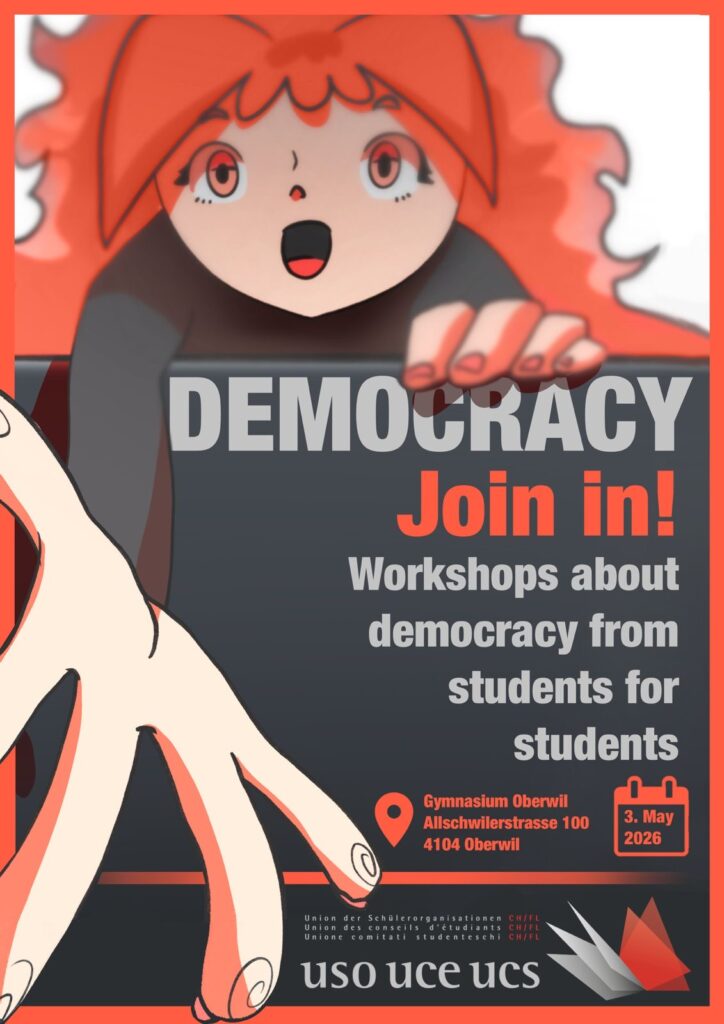
Gymnasium Oberwil, 03.05.2026, 09:00-16:30, From students for students
General Information
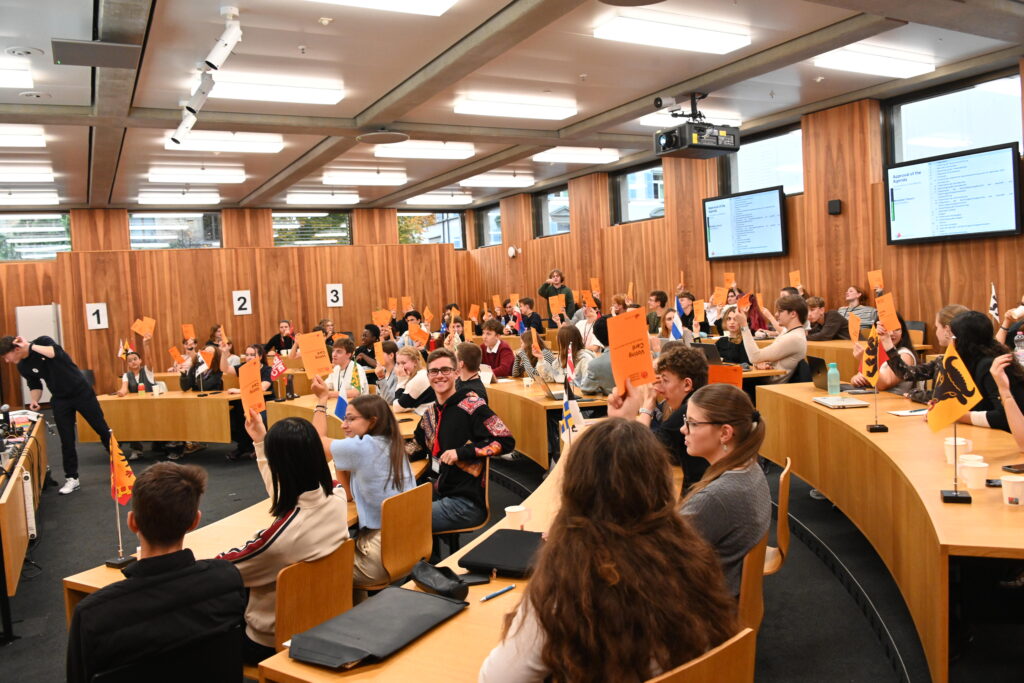
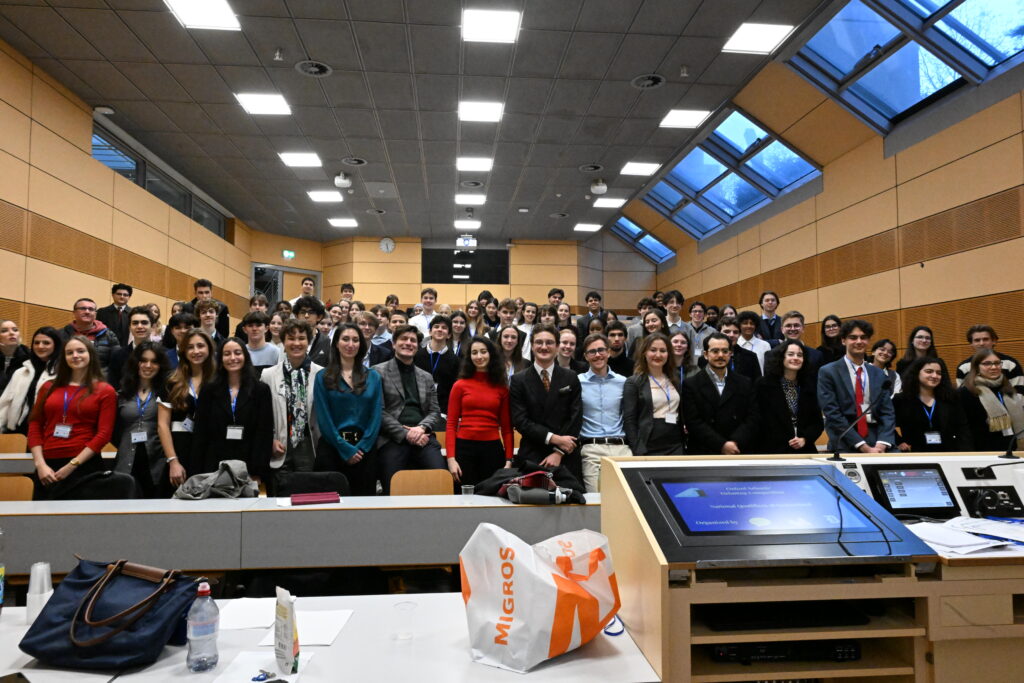
Starting a club, launching a petition, discussing human rights, and exploring whether our social media feeds influence our perception of society. These are the topics we’ll delve into during our workshops.
After a brief introduction to Swiss democracy, various workshops will take place in three sessions. You can sign up for your three favorites from among 11 exciting workshops. Spots are limited, so hurry!
The workshops are organized by enthusiastic students from all over Switzerland. Participation is free, but we recommend that you bring your own lunch. The workshops will be conducted primarily in English, though all materials will also be available in German and French.
We look forward to welcoming many enthusiastic and motivated students and to having interesting, productive discussions.
Registration
You can use this link to register for the respective workshops, the contents of the Workshops are specified in the list bellow:
Once you have registered for the workshops, please confirm your participation by filling out the form
The Workshops
1. Swiss democracy in depth
Understanding complex democratic processes: different parties and their roles in Switzerland, procedures in parliament. How does democracy in Switzerland differ from that of our neighboring countries? What is federalism and what role does it play? What power do the judiciary, executive, and legislature have? This workshop focuses on what makes our democracy unique.
2. Looking at other democracies
What forms of democracy exist and how can they be recognized? How do other countries manage their democracies? Are there states that are democratic on paper but are not actually 6governed that way in reality? Can we learn something from other countries? Does looking at other democracies show us the direction in which ours could develop in the future?
3. “If you want democracy, you must want an educated population.”
Should political education be given more weight in schools? Should it be compulsory to inform oneself before voting? What happens when advertising posters for parties and referendums spread falsehoods, and how can these be recognized? Should schools teach more about the value of democracy? How can education change our opinions?
4. Should there be a minimum and maximum age for voting and electoral rights?
The only canton that has set the voting age at 16 is the canton of Glarus (since 2007). Should the other cantons follow suit? Or only for referendums that affect the future of young people? Should an upper age limit be introduced for political activity and for the right to vote and stand for election? Arguments for and against this form the basis of this workshop.
5. What role does money play in a democracy?
Lobbying, corruption, and advertising: Where does money go in Switzerland? How can the super-rich influence democratic decisions? How are tax dollars handled, and who decides? Should we have a say in how our taxes are used? How responsible is democracy for the well-being of Swiss citizens? This is a very broad topic, which we will explore in depth in this workshop.
6. The internet, social media, and democracy
News, fake news, state-sponsored media, AI: Where do we get the information we need to form our opinions? What do we need to protect ourselves from on the internet, and how can we recognize fake news? Do filter bubbles limit our openness to other opinions? These are highly topical issues that we will explore together.
7. Launching your own initiative or petition
What steps are necessary to bring an idea to the ballot box? In this workshop, you will learn about these steps so that you can then launch your own initiative or petition. Alone or in groups, you will develop your ideas and collect signatures. At the end of the day, you will have the opportunity to convince other students of your idea and put it to a vote.
8. Becoming a politician and founding a party or association
What does it take to found an association or a party, and what are the advantages of doing so? What does the path to becoming a politician look like? How important are associations in Switzerland? Together, you will learn how to found your own association—a valuable skill for a future of civic engagement.
9. Migrants in Swiss democracy
Around 28% of the Swiss population do not have a Swiss passport and are therefore not eligible to vote. Yet they live here, work under the same conditions, and pay the same taxes. Why do they not have the right to vote? What conditions would be conceivable, and how can migrants still get involved in politics?
10. Giant mind map: Democracy
Together, you will develop a large mind map on the umbrella term “democracy.” Guiding questions will help you think, but you are free to design the map as you wish. Take your time to discuss together and record your thoughts.
11. Fundamental rights, human rights, and democracy
What role do fundamental and human rights play in a democracy? Does Switzerland ensure that everyone can claim their rights, regardless of their circumstances? Are we allowed to support countries that violate our values? Do these rights also apply to migrants? What do we perceive, and what remains hidden from us?
For more Informations join our Whatsapp Groups:
In the General USO Whatsappgroup you can get regular updates about current Events!
Contact the Organizers
For questions regarding the Democracy Workshop 2026, please contact:
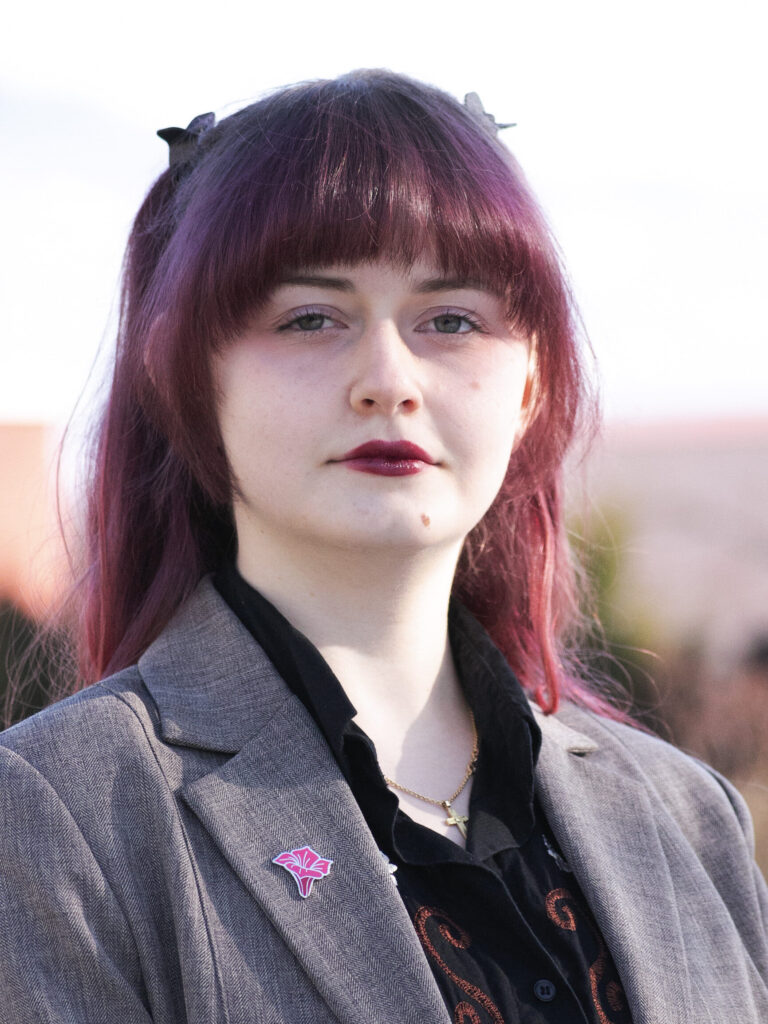
Xenia Mathez
Gender equality officer
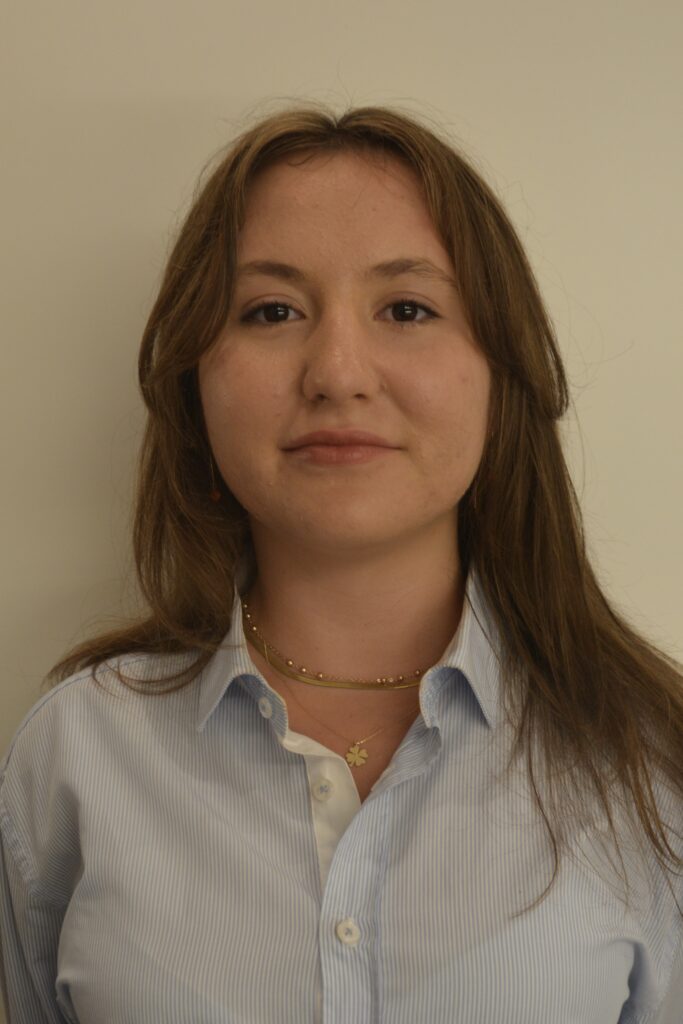
Eva Macher
Boardmember

Valentina Arganese
Advisory Board
Emails:
xenia.mathez@uso.ch
valentina.arganese@uso.ch
eva.macher@uso.ch